


The first time a hotel clerk looked at my ID and said “the Arthur Morgan?” I thought he was joking. He wasn’t. He was twenty-something, a little embarrassed, trying to reconcile the middle-aged man standing at his check-in desk with the outlaw he knew from a video game.
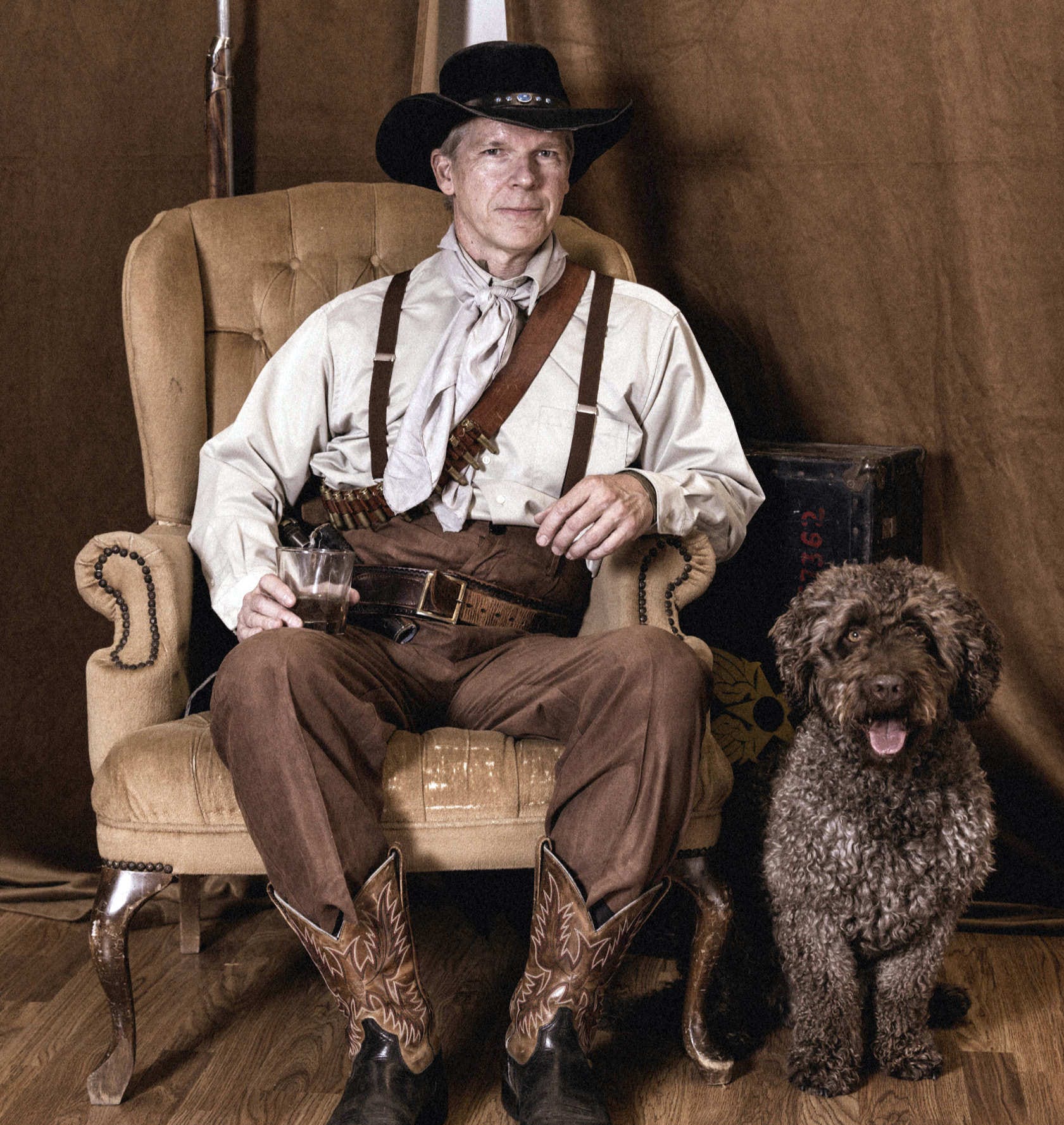
Let me explain. In 2018, a company called Rockstar Games released a sprawling Western called Red Dead Redemption 2. It became one of the best-selling, most critically acclaimed games ever made. The main character — a 19th-century outlaw who collects debts for a gang of outlaws and slowly realizes he’s been rationalizing harm his whole life — is named Arthur Morgan.
I am also Arthur Morgan. I am not that one. I am this one: a 62-year-old former Silicon Valley technology executive who spent nearly thirty years building the AI and attention economy, and who also, eventually, couldn’t keep rationalizing what he was doing.
The parallels are not lost on me.
In mid-2024, I was fired on a five-minute Zoom call. My boss read from a script. The woman from HR sat beside him without expression. This is hard, he said. We don’t need senior guys like you anymore, he said. You’ll get the complete details by email. Then the window closed. I stared at a blank screen while thirty years of conference rooms and product launches and strategy meetings dissolved into nothing.
My dog Paco noticed first. He’d been listening from the hallway, monitoring the particular quality of my silence, the way dogs do. He walked in, jumped up on the bench seat beside me, and put his paw on my shoulder. He does this when the stare doesn’t get me moving. Then he waited.
A few months later, I loaded him and a Rivian truck I’d named Roci — short for Rocinante, what Steinbeck named his truck in Travels With Charley — and drove 8,000 miles across America.
I told myself I was going to gather intelligence. Understand why the country had fractured. Come back with a diagnosis and maybe a remedy. I was, I realize now, still thinking like a product manager. Still operating as if the problem needed a roadmap and a rollout date.
What I found instead was something I hadn’t been looking for. I found it in a truck stop in Wyoming, where a man named Pat told me he’d spent four years homeless because he was too proud to ask for help, and that a church group in Salt Lake City had eventually given him a camper without asking about his politics. I found it in a Basque restaurant in Winnemucca, Nevada, where the food tasted like the kind of community we’ve stopped building. I found it in a teenager named Zayne, sitting on a log near the Golden Gate Bridge, confessing that he’d helped get a stranger fired online and wasn’t sure anymore if he was still one of the good guys. I found it on a stretch of freeway approaching Fort Collins, Colorado, watching myself become my father’s caretaker and realizing I didn’t know him the way I thought I did, because I’d been confusing Google for wisdom for most of my adult life.
And I found it crossing the Golden Gate Bridge in the dark on the first morning of the trip, listening to the th-thump of the bridge deck under my tires, thinking about a neighbor named Dan — a venture capitalist with a beautiful family — who had jumped from that same bridge years before. I’d always thought I understood why. Screens can hollow a person out quietly, and Silicon Valley’s version of success has a way of making even people who resist it feel like they can never climb high enough to escape its gravity. Dan had resisted better than most. He still jumped.
I had resisted less than Dan. I knew that. There were stretches in my life when the thought of ending things flashed across my mind with a clarity that scared me. In those moments, Paco would press against my leg or nudge me toward the door, as if he sensed something in the air I hadn’t yet named.
That’s the book I’m writing.
Travels With Paco: In Search of American Redemption is a memoir about what happens when the man who helped build the machines tries to see what’s on the other side of them. It draws on Robert Putnam’s research on social capital, follows the rough outline of Steinbeck’s road trip, and arrives at a moment when the machines I spent my career building are facing their own reckoning — in courts, in Congress, and in the minds of the people who built them.
The fictional Arthur Morgan, the outlaw in the video game, spends most of his story doing damage he tells himself is just business. Near the end, he can’t do it anymore. He goes looking for something to leave behind that isn’t wreckage. He doesn’t have much time left to find it.
I started this journey for similar reasons. I have more time, I hope.
Subscribers to this Substack can get beta reader access to the full working manuscript. I’m working through the final steps with a publisher now, and I’m posting excerpts and essays related to the themes in the book. I want real readers in the room while it takes its final form. If any of this sounds like something you want in your inbox, subscribe below — it’s free.
Paco is doing well. He is still, by considerable margin, the better half of this operation.
— Arthur Morgan (IRL)
Oh this just made me SO excited for the book launch